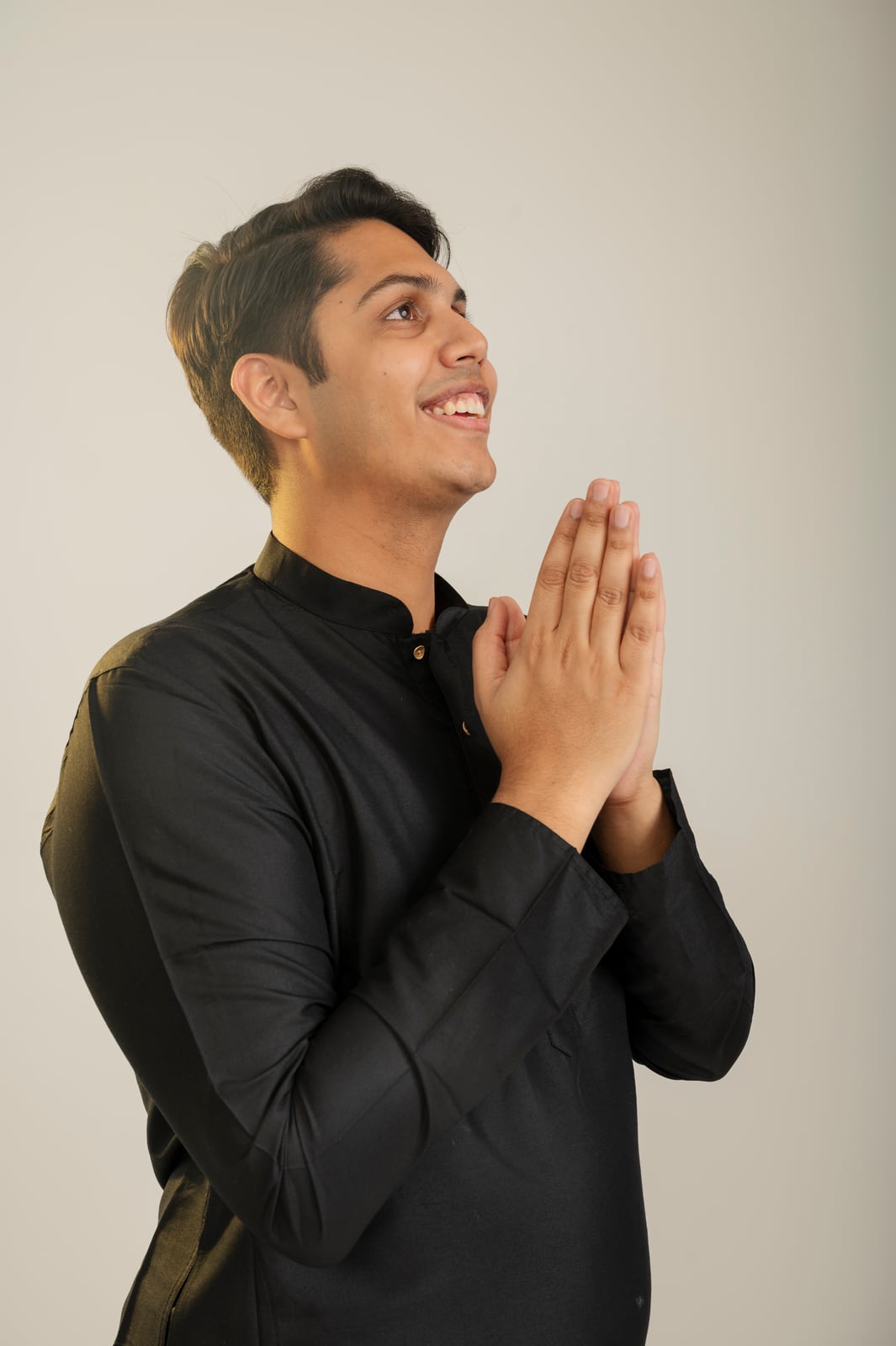
The choice between office vs studio corporate headshots affects more than the background. It changes employee downtime, visual consistency, lighting control, privacy, scheduling and how easily the portraits can be reproduced when new people join.
Neither option is automatically better. A Delhi NCR company photographing eighty employees has a different production problem from a Noida founder who needs three polished profile variations. This comparison helps marketing and HR teams choose by outcome rather than habit.
What an office headshot setup involves
An office headshot day brings the camera, lights and often a portable background to the workplace. Employees move through scheduled slots while the business continues around the production. The set may be a controlled station in a conference room or an environmental portrait using the actual office.
The main advantage is convenience for larger teams. The main constraint is that the available room, ceiling height, power, ambient light, noise and foot traffic were designed for work, not photography.
What a studio corporate portrait session involves
A studio is designed for image-making. Lighting positions, backgrounds, camera distance and subject separation can be controlled without moving office furniture or pausing for meetings. The subject leaves the normal work environment and can focus on direction, posture and expression.
Studio sessions are useful for founders, leadership teams, smaller groups and people who need several looks or wider personal-branding frames. Travel must be planned, but the production environment is more predictable.
Compare consistency and repeatability
For a one-day team shoot, both approaches can be consistent when the background, lighting diagram, camera height, crop and colour treatment are documented. The difference becomes clearer when people are photographed months apart.
A fixed studio setup is usually easier to recreate. An office room may be repainted, repurposed or affected by a different window-light condition. If your organisation hires frequently, ask how the visual standard will be recorded and repeated before choosing.

Compare employee time and scheduling
Office production reduces travel and can move a large team through short time slots. It works best when one coordinator protects the schedule, checks wardrobe and brings each person to the set before their slot. Unplanned queues quickly create disruption.
A studio session asks people to travel but may suit executives who need more time, privacy or several outcomes. Delhi, Gurgaon, Faridabad and Ghaziabad participants can be grouped into realistic call windows for a Noida studio day rather than all arriving together.
Compare background and brand context
An environmental office portrait can show real architecture, teams, labs, products or workspaces. That context is valuable for recruitment pages, annual reports and brand stories. It can also age quickly when the office changes.
A clean studio background keeps the portrait portable across LinkedIn, proposals, website grids and press use. A coloured wall or deliberately built setup can introduce brand personality without tying the image to a literal workplace. The right choice depends on whether context or longevity matters more.
Compare lighting control
Portable lighting can create excellent office headshots, but the production must control mixed colour temperatures, reflective glass, low ceilings and window changes. A site photograph or recce helps the photographer calculate space and equipment.
In a studio, daylight and ambient office lighting do not dictate the exposure. This makes subtle background, rim-light and glasses-reflection adjustments easier. It also allows a portrait look to be tested before the team arrives.
Compare privacy and performance
Some people relax near colleagues; others become self-conscious when a queue watches the session. An office setup should have enough privacy for direction and image review. A closed room is usually better than a station placed in a busy passage.
A studio can feel unfamiliar at first, but a calm set and clear coaching help the subject focus. Founders and leaders may also need time to create approachable, serious and speaking-profile options without being interrupted.
Choose the office when logistics lead
Office headshots are often the practical choice when the team is large, travel would be disruptive and one portable visual standard is sufficient. Before booking, confirm room dimensions, access, parking, power, blackout needs, furniture movement and the daily headcount.
Choose the studio when control and range lead
Studio corporate portraits fit smaller teams, leadership profiles, founder imagery and sessions needing multiple backgrounds, wardrobe changes or wider compositions. They also help when the office is visually busy, confidential, under construction or simply too small for safe lighting distances.
Consider a hybrid system
A company can photograph a large employee group at the office and create more detailed leadership portraits in the studio. The two sets should share crop, colour and background logic where the website displays them together.
Another hybrid is to build a studio-style station inside the office while capturing a smaller number of environmental frames elsewhere. Keep those deliverables separate so the fast headshot line does not wait for contextual scenes.
Information to share before requesting a quote
- Number of people and required completion rate.
- Primary uses, crop and background expectations.
- Office location, room photographs and access constraints.
- Wardrobe guidance, grooming and image-review process.
- Whether future new hires must match the same system.
Read our guide on what to wear for a corporate headshot, review the Sooper Studios space and browse the studio gallery. Explore our production services or share your team size and intended use for a location recommendation.
Frequently asked questions
Can studio-quality headshots be taken in an office?
Yes, when the room has enough space and the lighting, background and workflow are planned. Site constraints should be checked before production.
Which option is better for a large team?
An office station often reduces travel and downtime for a large team. Studio sessions can still work when people are grouped into planned call windows.
How can future employees match existing headshots?
Document the background, lighting positions, camera height, lens, crop and colour treatment. A stable studio environment is generally easier to reproduce.
Can we capture environmental portraits and clean headshots together?
Yes. Treat them as separate setups with their own shot lists and schedules so neither workflow is rushed.