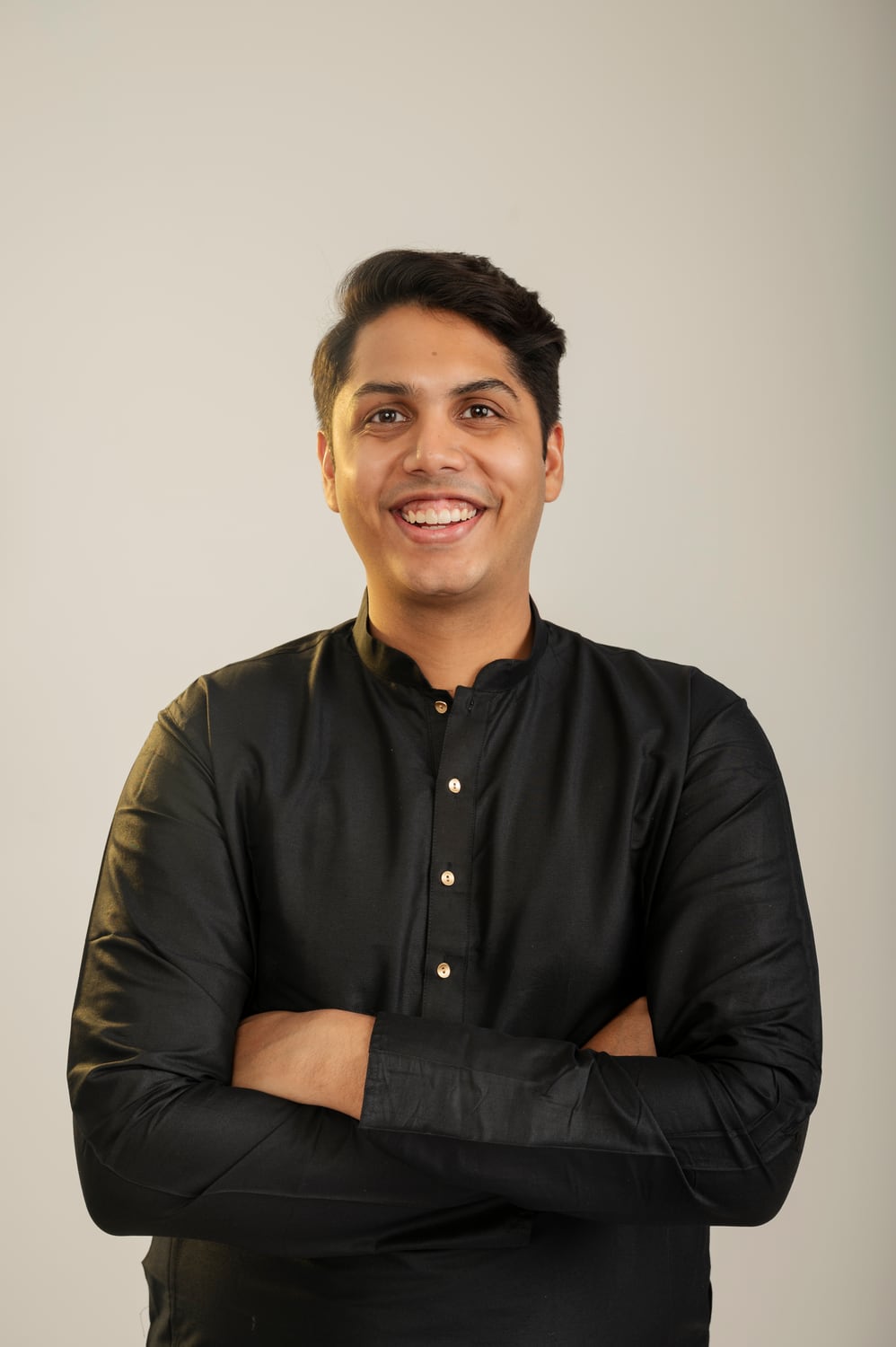
Knowing what to wear for a corporate headshot is less about buying a “professional” costume and more about making deliberate choices. The photograph should look credible in your industry, consistent with your real working style and simple enough that your face remains the first thing people notice.
This guide helps founders, executives, consultants and team members prepare for a studio portrait in Delhi NCR. It also gives HR and marketing teams a practical way to brief several people without making everyone look identical.
Start with where the headshot will appear
A LinkedIn profile, leadership page, speaker bio, annual report and press article do not make exactly the same visual demand. A small LinkedIn thumbnail needs a clear face, clean neckline and recognisable expression. A founder page may allow more personality, a wider crop and a second wardrobe option. A formal tender or board profile may need a restrained visual tone.
List the main uses before choosing clothes. If the session must cover both a conservative corporate profile and a more approachable founder portrait, bring two looks rather than forcing one outfit to perform every job.
Dress like yourself on an important workday
A reliable rule is to dress one level more polished than your normal client-facing day. A lawyer, designer, technology founder and wellness consultant should not be pushed into the same blazer-and-tie formula. The clothing should support the professional promise you actually make.
Choose pieces you have worn before and can sit, turn and breathe in comfortably. New or restrictive clothing often changes posture and expression. If an outfit makes you keep checking the collar, sleeves or fit, it will also use valuable session time.
Use colour to separate you from the background
Solid or gently textured colours are dependable because they photograph cleanly and keep attention on the face. Navy, charcoal, olive, cream, rust, muted blue and deeper jewel tones can all work; the best option depends on skin tone, hair, brand palette and the planned background.
Do not choose a white shirt automatically if the background is also bright. A dark layer or jacket can create separation. Likewise, an all-black outfit needs enough lighting and fabric detail to avoid becoming a flat shape. Share wardrobe photographs with the production team so background and lighting can be planned together.
Be careful with patterns, logos and tiny detail
Fine stripes, dense checks and very small repeating patterns can create moiré—unwanted visual interference that may appear on camera or after resizing. A larger, calmer pattern can work for a creative or founder portrait when it matches the person’s real style and does not overpower the expression.
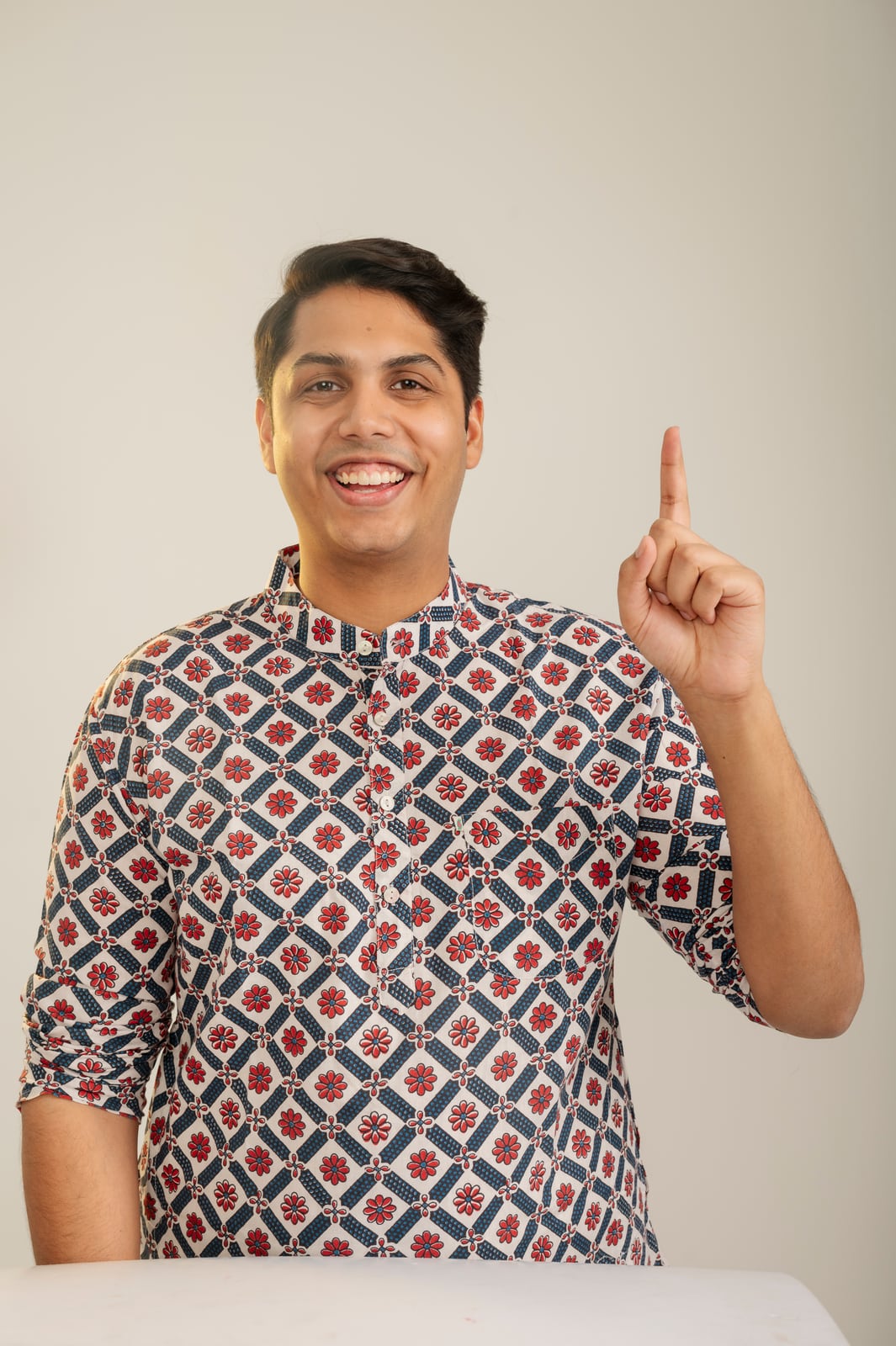
Avoid prominent logos unless branded clothing is intentional. Check how lapel pins, ID cards, name badges and embroidered marks will read at headshot size. Remove anything that adds an accidental message.
Check fit around the shoulders and neckline
Most corporate headshots are cropped around the chest, so the collar, neckline, lapels and shoulders carry more visual weight than trousers or shoes. Make sure collars sit flat, jackets do not pull and sleeves allow a natural arm position. Steam or press the visible pieces and carry them on hangers.
Layering gives useful options. A blazer, overshirt, jacket, dupatta or structured knit can be added or removed without a full wardrobe change. For team sessions, a broad rule such as “business casual, solid mid-tone colours, no large logos” creates cohesion while allowing individual style.
Bring two or three complete options
Do not bring a bag of unrelated tops and expect the decision to happen instantly. Prepare complete looks, including inner layers, jewellery and any glasses. Photograph each look on your phone in window light and check how the neckline and colour frame your face.
- One dependable outfit aligned with your main professional role.
- One slightly more relaxed or creative option for founder, speaker or social use.
- One alternate layer in case the background or crop changes.
If you travel from Gurgaon, Delhi, Faridabad or Ghaziabad for a Noida session, pack wrinkle-prone pieces carefully and allow time to change. Do not arrive wearing the final jacket during a long car journey.
Plan grooming for recognition, not reinvention
Style hair, facial hair and makeup in a way that still looks like you on a normal professional day. The camera and lighting reveal flyaways, shine and uneven fabric, but heavy last-minute changes can make a headshot feel unfamiliar.
Bring a comb or brush, basic touch-up products, blotting paper and the glasses you use at work. Clean lenses before the session. If you alternate between glasses and no glasses, decide whether both versions are useful and allow time for lighting adjustments that control reflections.
Coordinate a team without erasing personality
For company headshots, consistency should come from background, lighting, crop, camera height and colour treatment—not identical outfits. Give employees examples of the desired level of formality, a short avoid list and a deadline for wardrobe questions.
Senior leaders may need an additional jacket or wider portrait for press and speaking opportunities. New team members should be able to reproduce the visual standard later. Our guide to office versus studio corporate headshots explains how location choice affects that consistency.
Use a final preparation checklist
- Confirm primary use, crop and background.
- Prepare two complete, pressed looks.
- Check patterns and logos on a phone camera.
- Pack grooming and glasses-cleaning items.
- Sleep, hydrate and arrive early enough to settle.
Review the portrait possibilities at Sooper Studios and see finished outcomes in the studio gallery. You can explore our production services or share your role, intended use and wardrobe options for a practical session plan.
Frequently asked questions
Should I wear black for a corporate headshot?
Black can work well when the fabric retains detail and the background creates separation. Bring another layer or mid-tone option so the photographer can compare.
Are patterns always bad in professional portraits?
No. Larger, intentional patterns can express personality. Very fine stripes or dense checks are riskier because they may create moiré or distract at small sizes.
Should a whole company wear matching colours?
Usually not. Set a shared level of formality and a broad palette, then create consistency through lighting, background, crop and editing.
How many outfits do I need for a headshot session?
Two complete options are often enough for a focused headshot session. Add a third only when it serves a genuinely different use or visual tone.