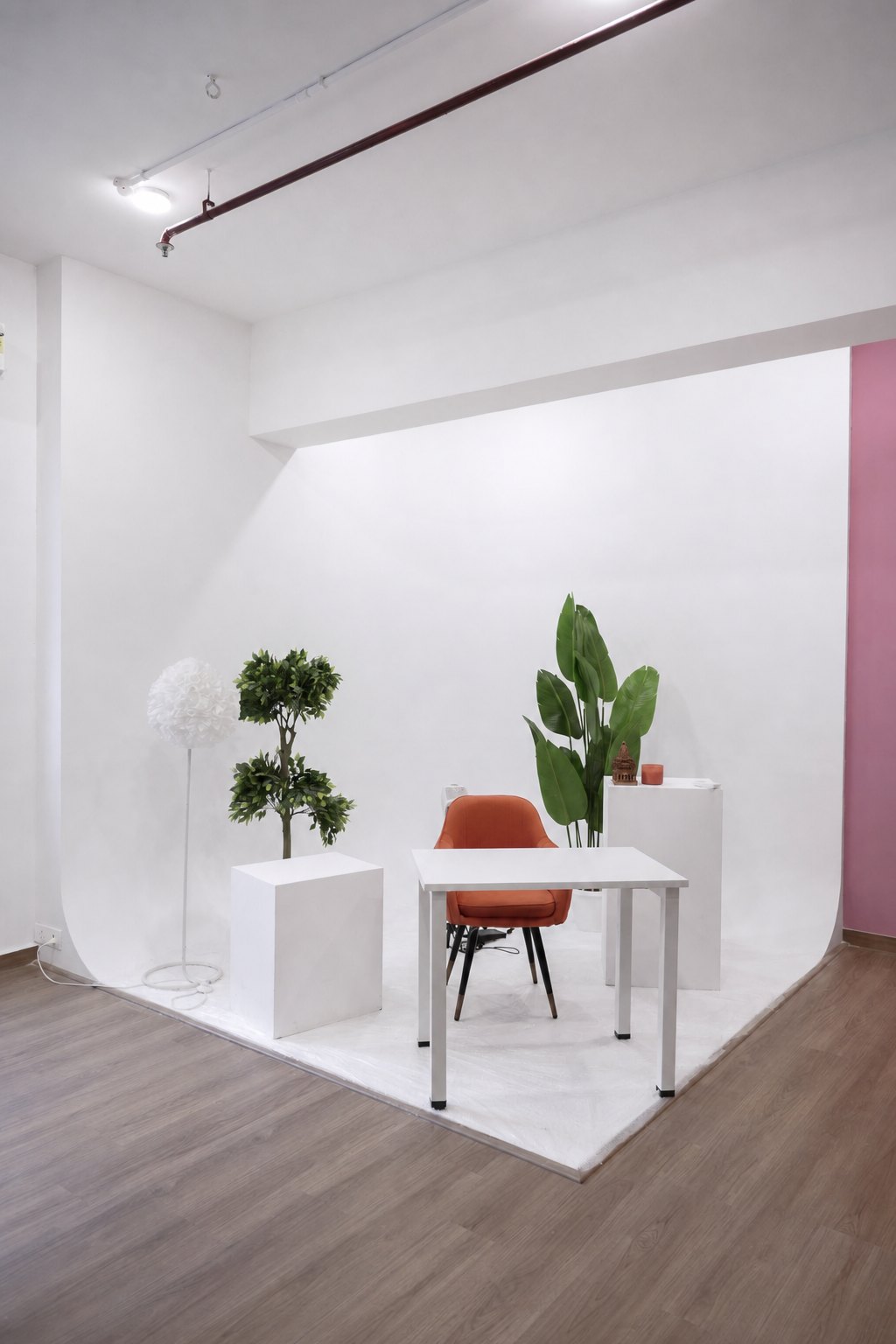
A white cyclorama is not locked to one visual result. With deliberate exposure, distance and light control, the same curved surface can photograph as clean white, quiet grey, a deep neutral tone or a coloured background. That flexibility is why a cyclorama lighting guide matters before a fashion, product or video team arrives at the studio.
The useful question is not “How many lights do we need?” It is “What should the background look like, and how independently must we control it from the subject?” This guide gives Delhi NCR photographers, producers and brand teams a practical way to answer that question.
Start with the job of the background
Define the visual role before choosing fixtures. A marketplace cut-out needs an even, bright surface with clean separation around the product. A fashion lookbook may need a soft grey gradient that keeps white clothes visible. A campaign film may use a coloured wash, moving light or a deliberate pool of shadow.
Collect references and label each one accurately: pure white, pale grey, mid-grey, low-key, uniform colour or colour gradient. “Clean” is not specific enough. Also confirm whether the camera sees only the wall or the wall and floor, because the sweep must remain consistent across both.
Understand why white can photograph grey
A surface appears white only when enough light reaches it relative to the camera exposure. If the subject is lit correctly but the cyclorama receives less light, it records grey. Increase the difference further and it becomes a deeper neutral. This is often more controllable than replacing the entire background.
Distance is an important tool. Move the subject and key light away from the cyc and less spill reaches the wall. Move them closer and the subject light lifts the background. Flags, grids and careful light angles can reduce spill without making the subject lighting hard or unattractive.
Light the cyclorama and subject as separate zones
For repeatable results, think in two systems. The background lights create the tone and evenness of the cyclorama. The key, fill and edge lights shape the subject. When one fixture is expected to do both jobs, small subject adjustments can produce unexpected hotspots or gradients on the wall.
Place background sources so their beams overlap smoothly across the visible area. The correct number and position depend on the width in frame, camera angle, fixture type and whether the floor is visible. Test the far corners and the lower sweep, not only the centre behind the subject.
Create clean white without losing the subject edge
A bright background can wrap light around hair, pale clothing, transparent packaging and reflective products. If the cyclorama is pushed far beyond the working exposure, edges become soft and contrast falls. Aim for the brightness required by the deliverable rather than making the wall as bright as possible.
Check highlight warnings, waveform or a tethered frame. Add controlled separation with subject distance, negative fill, an edge light or a slightly darker wardrobe choice. For e-commerce, agree whether the final background will be achieved entirely in camera or refined during clipping and retouching.
Build grey and low-key results from distance
To create grey, reduce the light reaching the cyc while exposing the subject normally. Increase the subject-to-background distance when space allows, turn the key away from the wall and use grids or flags to contain spill. A subtle gradient can add depth; an accidental patch usually looks like a mistake.
For a darker result, control every uncontrolled source, including ceiling bounce, window light and white floor reflection. Dark clothing still needs separation. A rim or edge light can define the silhouette without lifting the whole background.
Add colour with a controlled wash
Gels or RGB fixtures can transform a white cyclorama into a brand colour. The most saturated result usually comes when the coloured background exposure is not overwhelmed by white spill from the subject lights. Keep colour sources aimed at the cyc and flag the key where necessary.
Test colour on the actual camera profile and intended white balance. A colour that looks correct to the eye may shift on camera, while skin tones and product colours must remain reliable. Photograph a reference frame and record fixture settings if the look will be recreated later.
Plan differently for stills and video
Flash can provide substantial output for still photography, but video needs continuous light that remains stable through the take. Confirm frame rate and shutter requirements before choosing fixtures. High-speed or slow-motion capture may demand more output and flicker-safe equipment.
Video also reveals changes across movement. Ask talent to walk through the planned blocking while monitoring the background and skin exposure. For interviews, check whether the cyclorama surface creates unwanted room sound and whether quieter fixtures or closer microphone placement are needed.
Protect the sweep and schedule reset time
Footwear, wheels, stands and product handling can mark a white floor. Decide whether shoes need sole protection, whether heavy equipment requires floor protection and who approves repainting or touch-up. Do not place tape on the curved transition unless the studio confirms a safe method.
Schedule lighting tests before talent call time. A broad white setup, controlled grey portrait and coloured video look are three different setups even when the physical wall stays unchanged. Include changeover and meter time in the call sheet.
Use a pre-light checklist
- Define the exact background tone and whether the floor is visible.
- Confirm the widest camera angle and subject movement.
- Separate background and subject lighting responsibilities.
- Test exposure, spill, edge separation and reflective products.
- Record fixture positions, power, colour and camera settings.
- Protect the sweep and include setup, reset and pack-down time.
Compare this lighting approach with our guide to cyclorama versus paper backdrops, then review the Sooper Studios production space and finished studio gallery. You can explore production services or share your references and shot list for a practical pre-light recommendation.
Frequently asked questions
Can a white cyclorama look grey without repainting it?
Yes. Reduce the light reaching the cyclorama relative to the subject exposure and control spill with distance, light angle, grids or flags.
Should the background be brighter than the subject for clean white?
It often needs more exposure, but excessive brightness can cause flare and weak edges. Test the final image rather than following a fixed ratio blindly.
Can RGB lights create an accurate brand colour?
They can create a close controlled result, but the camera profile, white balance, spill and surface exposure affect the recorded colour. Test and record settings.
Do still photography and video use the same cyclorama lighting?
The lighting idea can be similar, but video requires continuous, stable and often flicker-safe output. Movement and sound also need additional checks.